In an increasingly multilingual world, more families than ever are navigating bilingual and multilingual education—often without feeling fully equipped
to support it at home. One of the most common misconceptions I encounter as a language teacher is the belief that parents must be fluent in a language
in order to help their children develop it.
In reality, what matters most is not fluency, but consistency, intention, and environment. Families play a crucial role in shaping attitudes toward language,
even when the target language is not spoken confidently—or at all—by adults at home.
Bilingualism Begins with Habits, Not Perfection
Language learning does not happen only in classrooms. It grows through repeated exposure, emotional safety, and meaningful routines. When families create small but
regular language habits, they help children associate languages with connection rather than pressure.
Parents do not need to correct grammar, explain complex structures, or “teach” in a traditional sense. Their role is to normalise
the presence of multiple languages in daily life and to create an environment where language feels safe and meaningful.
Some helpful mindset shifts include:
• Viewing language learning as shared exploration, not performance
• Allowing children to mix languages without fear of correction
• Valuing communication and understanding over accuracy
These principles are particularly important for heritage learners, who may feel caught between languages, expectations, and cultural identities.
Simple Routines That Make a Big Difference
Multilingual habits are most effective when they are small, predictable, and emotionally positive. Families—regardless of their own language level—can support learning through simple, repeatable routines:
One Moment a Day
Choose a fixed daily moment (bedtime, breakfast, the car ride to school) when the target language is always present. This might involve listening to a short audio story, a song, or a narrated text.
Passive Exposure Counts
Children benefit from hearing a language regularly, even if they are not actively speaking. Audiobooks, short videos, and narrated stories provide valuable exposure, especially when supported by visuals or subtitles.
Language Through Stories
Stories offer emotional context. They show language in use, connected to characters, feelings, and experiences. This is particularly powerful for children who feel anxious about speaking or making mistakes.
Two examples that families frequently engage with are bilingual stories available on the Bilingual Cerebros YouTube channel:
through simple, repeatable routines:
One Moment a Day
Choose a fixed daily moment (bedtime, breakfast, the car ride to school) when the target language is always present. This might involve listening to a short audio story, a song, or a narrated text.
Passive Exposure Counts
Children benefit from hearing a language regularly, even if they are not actively speaking. Audiobooks, short videos, and narrated stories provide valuable exposure, especially when supported by visuals or subtitles.
Language Through Stories
Stories offer emotional context. They show language in use, connected to characters, feelings, and experiences. This is particularly powerful for children who feel anxious about speaking or making mistakes.
Two examples that families frequently engage with are bilingual stories available on the Bilingual Cerebros YouTube channel:
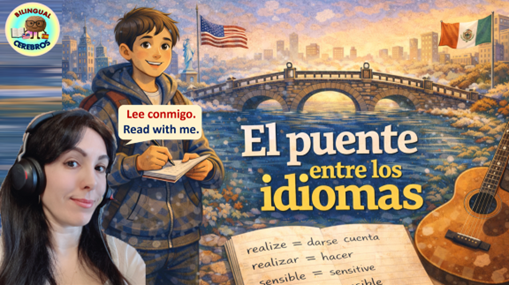
• El puente entre los idiomas (The Bridge Between Languages), a Spanish story exploring false friends and linguistic confusion through empathy and humour
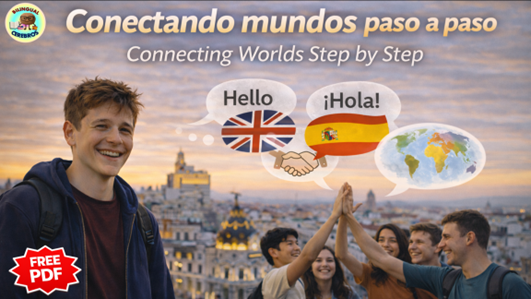
• Conectando mundos paso a paso (Connecting Worlds Step by Step), a reflective narrative about navigating languages gradually and with confidence
Both stories are available with narrated audio and subtitles, making them accessible even to parents who are not fluent in the target language themselves.
Media as a Bridge, Not a Babysitter
Digital resources are most effective when they are used intentionally. Rather than serving as background noise, media can become a shared experience that strengthens both language development and family connection.
Simple strategies include:
• Listening or watching together, even briefly
• Pausing to ask open questions such as What do you think is happening?
• Encouraging children to retell the story in their stronger language
• Returning to the same story multiple times
Repetition builds familiarity, and familiarity builds confidence. When children know what to expect, they can focus on meaning rather than fear of error.
From Home Practice to Deeper Engagement
Across years of working with bilingual families, heritage learners, and students learning languages as bridges between cultures, one pattern consistently emerges: learners progress more confidently when they see themselves reflected in stories — not idealised learners, but real children and families navigating uncertainty, identity, and belonging through language.
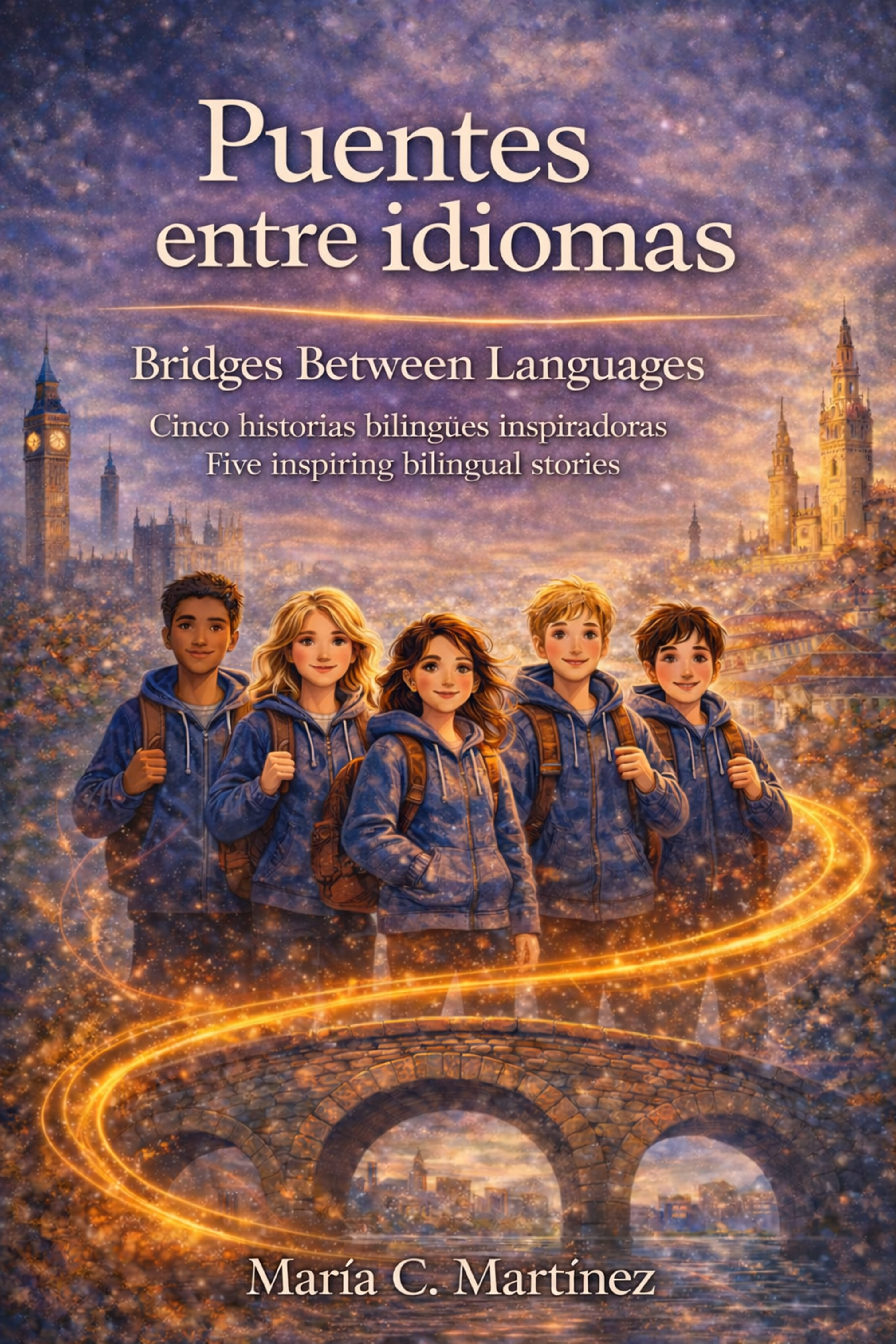
This experience led to the creation of my book Puentes entre idiomas / Bridges Between Languages, a collection of five bilingual stories inspired by classroom practice, family conversations, and student voices. Each story follows young characters living between languages and cultures as they navigate doubts, mistakes, and discoveries that help them grow in confidence and self-understanding.
The stories are presented first in Spanish and then in English, allowing readers to engage with both languages in a natural and supportive way. At the end of each story, comprehension and reflection questions encourage independent learning, classroom discussion, or shared reading at home. The aim is not to teach rules, but to accompany learners — heritage speakers, language students, teachers, and families — who see language learning as a process of connection and belonging.
Book available in Amazon: https://a.co/d/06k9WT1h
Video presentation: https://youtu.be/KYoKqTGIvwo
As mentioned earlier, El puente entre los idiomas and Conectando mundos paso a paso are available with narrated audio on the Bilingual Cerebros YouTube channel, offering families an accessible way to
explore the stories and incorporate them into everyday language routines.
 Why This Matters Now
As bilingual education continues to expand, families are increasingly asked to support language learning beyond the classroom—often without clear guidance. By focusing on habits, emotional safety, and accessible resources, we empower parents to become confident partners in the learning process rather than silent observers.
Multilingualism does not thrive through pressure or perfection, but through presence, and every small routine becomes a bridge.
The narrated stories below are two of the five included in Puentes entre idiomas / Bridges Between Languages mentioned earlier. They provide a practical example of how shared listening can support everyday multilingual routines.
In the book, the five stories are accompanied by comprehension questions at three levels and additional guidance for use at home or in the classroom.
 👉 Watch / View on YouTube
 👉 Watch / View on YouTube
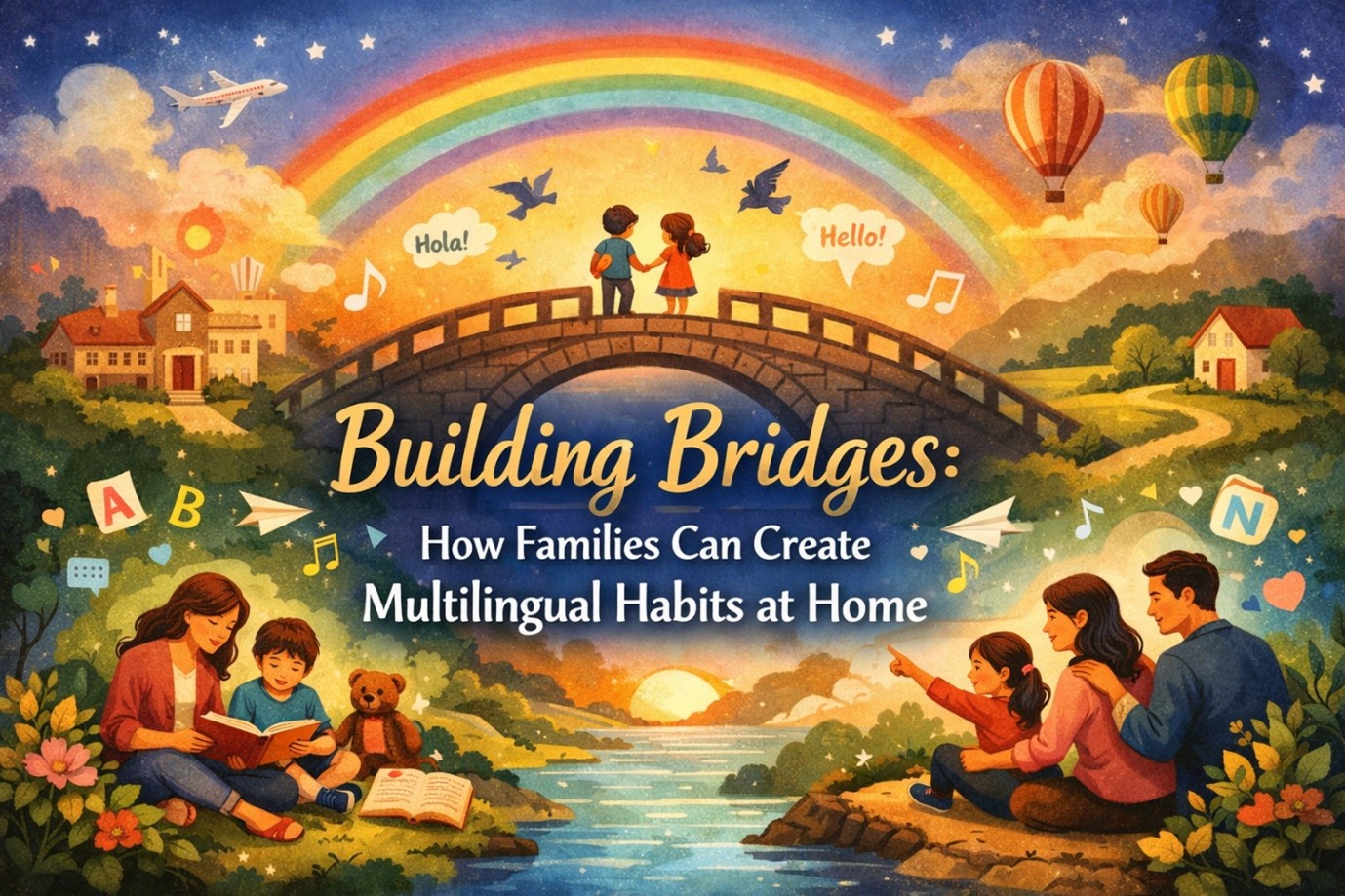
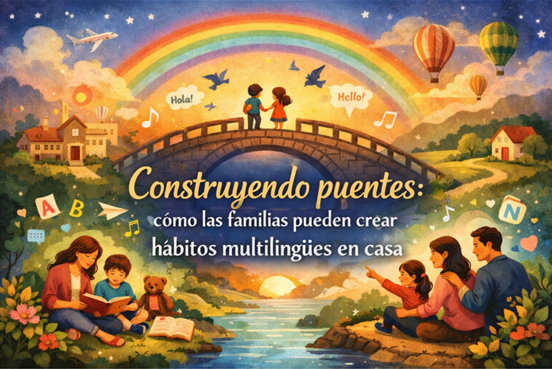
Construyendo puentes: cómo las familias pueden crear hábitos multilingües en casa
23 February 2026 • 2/23/2026
Construyendo puentes: cómo las familias pueden crear hábitos multilingües en casa
En un mundo cada vez más multilingüe, son muchas las familias que acompañan a sus hijos en procesos de educación bilingüe o multilingüe, a menudo sin sentirse plenamente preparadas para apoyarlos desde casa. Uno de los malentendidos más frecuentes que encuentro como profesora de lenguas es la idea de que los padres deben dominar un idioma para poder ayudar a sus hijos a desarrollarlo.
En realidad, lo más importante no es la fluidez, sino la constancia, la intención y el entorno. Las familias desempeñan un papel clave en la forma en que los niños se relacionan con los idiomas, incluso cuando la lengua meta no se habla con seguridad —o no se habla en absoluto— en casa.
El bilingüismo empieza con hábitos, no con la perfección
El aprendizaje de una lengua no ocurre únicamente en el aula. Se construye a través de la exposición repetida, la seguridad emocional y las rutinas con sentido. Cuando las familias crean pequeños hábitos lingüísticos, pero constantes, ayudan a que los niños asocien los idiomas con la conexión y no con la presión.
Los padres no necesitan corregir la gramática, explicar estructuras complejas ni “enseñar” de forma tradicional. Su papel es normalizar la presencia de varias lenguas en la vida diaria y crear un entorno en el que el idioma se perciba como algo seguro y significativo.
Algunos cambios de enfoque útiles incluyen:
• Ver el aprendizaje de lenguas como una exploración compartida, no como una actuación
• Permitir que los niños mezclen idiomas sin miedo a la corrección constante
• Valorar la comunicación y la comprensión por encima de la precisión
Estos principios son especialmente importantes para los estudiantes de herencia, que a menudo se sienten entre dos lenguas, expectativas y realidades culturales.
Pequeñas rutinas que marcan una gran diferencia
Los hábitos multilingües funcionan mejor cuando son sencillos, previsibles y emocionalmente positivos. Las familias —independientemente de su nivel lingüístico— pueden apoyar el aprendizaje mediante rutinas simples y repetibles:
Un momento al día
Elegir un momento fijo del día (antes de dormir, durante el desayuno, en el coche camino al colegio) en el que la lengua meta esté siempre presente. Puede ser escuchar un breve cuento narrado, una canción o un texto con audio.
La exposición pasiva también cuenta
Los niños se benefician de escuchar un idioma con regularidad, incluso cuando no lo hablan activamente. Los audiolibros, los vídeos cortos y las historias narradas ofrecen una exposición valiosa, especialmente cuando incluyen imágenes o subtítulos.
El lenguaje a través de las historias
Las historias aportan un contexto emocional. Muestran la lengua en uso, vinculada a personajes, sentimientos y experiencias. Esto resulta especialmente poderoso para niños que sienten ansiedad al hablar o miedo a equivocarse.
Dos ejemplos que muchas familias utilizan con frecuencia son las historias bilingües disponibles en el canal de YouTube de Bilingual Cerebros:
• El puente entre los idiomas (The Bridge Between Languages), un relato en español que explora los falsos amigos y la confusión lingüística desde la empatía y el humor
• Conectando mundos paso a paso (Connecting Worlds Step by Step), una narración reflexiva sobre cómo avanzar entre lenguas de forma gradual y con confianza
Ambas historias están disponibles con audio narrado y subtítulos, lo que las hace accesibles incluso para padres que no dominan la lengua meta.
Los recursos digitales como puente, no como niñera
Los recursos digitales son más efectivos cuando se utilizan de manera intencional. En lugar de servir solo como ruido de fondo, los contenidos audiovisuales pueden convertirse en experiencias compartidas que refuercen tanto el aprendizaje lingüístico como el vínculo familiar.
Algunas estrategias sencillas incluyen:
• Escuchar o ver el contenido juntos, aunque sea por poco tiempo
• Pausar para hacer preguntas abiertas como: ¿Qué crees que está pasando?
• Animar a los niños a volver a contar la historia en su lengua más Fuerte
• Repetir la misma historia en diferentes momentos
La repetición genera familiaridad, y la familiaridad construye confianza. Cuando los niños saben qué esperar, pueden centrarse en el significado y no en el miedo al error.
De la práctica en casa a un compromiso más profundo
A lo largo de años de trabajo con familias bilingües, estudiantes de herencia y alumnos que aprenden lenguas como puentes entre culturas, he observado un patrón constante: los aprendices progresan con mayor seguridad cuando se ven reflejados en las historias. No en modelos idealizados, sino en niños y familias reales que atraviesan dudas, construyen identidad y encuentran su lugar entre lenguas.
De esta experiencia nace mi libro Puentes entre idiomas / Bridges Between Languages, una colección de cinco relatos bilingües inspirados en la práctica docente, en conversaciones con familias y en las voces de mis propios estudiantes. Cada historia sigue a jóvenes que viven entre lenguas y culturas mientras enfrentan errores, inseguridades y descubrimientos que fortalecen su confianza y comprensión de sí mismos.
Los relatos se presentan primero en español y luego en inglés, lo que permite a lectores y familias interactuar con ambos idiomas de forma natural y acompañada. Al final de cada historia se incluyen preguntas de comprensión y reflexión que favorecen el aprendizaje autónomo, el debate en el aula o la lectura compartida en casa. El propósito no es centrarse en reglas o rendimiento, sino acompañar a estudiantes de herencia, aprendices de lenguas, docentes y familias que entienden el aprendizaje lingüístico como un proceso de conexión e identidad.
Libro disponible en Amazon:
https://a.co/d/06k9WT1h
Vídeo de presentación:
https://youtu.be/KYoKqTGIvwo
Como se mencionó anteriormente, El puente entre los idiomas y Conectando mundos paso a paso están disponibles con audio narrado en el canal de YouTube Bilingual Cerebros, ofreciendo a
las familias una forma accesible de integrar estas historias en sus rutinas lingüísticas cotidianas.
Por qué esto importa ahora
A medida que la educación bilingüe continúa expandiéndose, a las familias se les pide cada vez más que apoyen el aprendizaje de lenguas más allá del aula, a menudo sin una orientación clara. Al poner el foco en los hábitos, la seguridad emocional y el acceso a recursos comprensibles, empoderamos a los padres para que se conviertan en colaboradores seguros y activos del proceso de aprendizaje, en lugar de observadores silenciosos.
El multilingüismo no se construye desde la presión ni desde la perfección, sino desde la presencia, y cada pequeña rutina se convierte en un puente.
Los siguientes relatos narrados son dos de los cinco incluidos en Puentes entre idiomas / Bridges Between Languages, mencionados anteriormente en este artículo. Ofrecen un punto de partida sencillo para crear rutinas de escucha compartida en casa. La versión del libro amplía esta experiencia con actividades de comprensión estructuradas en tres niveles y más ideas para su uso en el aula y en familia.
👉 Watch / View on YouTube
👉 Watch / View on YouTube
Autora: Margarita García de Vinuesa
Concurso bilingüe de poesía: el primer concurso de escritura en Bilingual Cerebros.
5 April 2026 •4/5/2026

Lo primero de todo, agradecerte por darme la oportunidad de colaborar con esta primera entrada en tu blog. Es un placer formar parte de proyectos que inspiran y acompañan a tantas familias, docentes y estudiantes autodidactas.
Como es la primera colaboración en el blog de Bilingual Cerebros, quería también recordar un primer concurso de escritura, que guardo con mucho cariño en mi caja de recuerdos de las clases de español.
Hay experiencias que dejan huella, no por la cantidad de participantes, sino por la emoción que generan 💛. Así recuerdo especialmente la primera edición del concurso de poesía organizado por Bilingual Cerebros en abril–mayo de 2023, con motivo del Día Internacional del Libro 📚✨.
En aquella ocasión, mis alumnos participaron con mucha ilusión. Incluso mi propio hijo se animó a formar parte del concurso y escribir su poesía. Ver cómo cada uno daba vida a sus ideas, jugaba con las palabras y se expresaba en español fue realmente especial 🌈✍️.
Y aún hay más: los dos finalistas fueron una de mis alumnas y mi propio hijo.🥹🎉
Un momento lleno de orgullo, emoción y significado que guardaré siempre.
Es cierto que en esa primera edición la participación no fue muy numerosa. Pero precisamente ahí está la magia de este tipo de iniciativas: no se trata solo de cifras, sino de impacto 🌟. De cada persona que se atreve a escribir, de cada historia que comienza a tomar forma, de cada paso que se da en el camino del aprendizaje.
Por eso es tan importante no rendirse. Porque los proyectos que nacen con cariño y propósito crecen con el tiempo 🌿.
Quiero dar las gracias de corazón a María, de Bilingual Cerebros, por crear iniciativas tan creativas y enriquecedoras para los todos los que aprenden español o inglés o viven entre lenguas 🙌. Espacios donde la escritura se convierte en juego, en expresión y en conexión con la lengua.
Por hoy me despido, porque esto sólo es el principio…
Margarita
YouTube:
👉 Watch / View on YouTube
👉 Watch / View on YouTube
Newsletter para familias bilingües:
👉 Watch / View on YouTube
Blog:
👉 Watch / View on YouTube
Autora: Margarita García de Vinuesa
Gracias por dar voz a tantas historias entre idiomas, Thank You for Giving a Voice to So Many Stories Between Languages
30 May 2026 •30/5/2026

Todavía seguimos emocionadas después de compartir el video oficial del Concurso Internacional de Escritura “Tu historia entre idiomas” 2026.
Queremos volver a dar las gracias a todas las personas que participaron, a las familias, docentes y estudiantes que hicieron posible este proyecto tan especial. Cada relato nos ha permitido viajar entre culturas, emociones, recuerdos y experiencias de vida únicas.
Además, queremos compartir una noticia que nos hace muchísima ilusión: algunos de los libros ya han llegado a su destino… ¡y otros siguen viajando rumbo a distintos lugares del mundo!
Ver la emoción de los participantes al recibir sus premios y descubrirse en el video ha sido realmente inolvidable.
Uno de los momentos más especiales fue ver la reacción de un alumno mío alumno al descubrir en el video creado por Bilingual Cerebros en colaboración con Ms. Sabrina’s Bilingual Playtime y el Jardín de Margarita que era el ganador de la categoría infantil. La emoción, la sorpresa y la felicidad reflejadas en ese instante son exactamente la razón por la que proyectos así merecen la pena.
También quiero mencionar con muchísimo cariño a Caroline, el pseudónimo elegido por el grupo de autoras de la Erwachsenenschule Völs para presentar su texto conjunto. Ellas, junto con Wakako, están muy felices de haber participado y de ver sus historias incluidas en el video del concurso. Para muchos estudiantes, escuchar su nombre, ver su relato reconocido y sentirse parte de una comunidad internacional supone una motivación enorme para seguir aprendiendo y escribiendo en español.
Este concurso nació desde el corazón gracias a la colaboración entre Bilingual Cerebros, Sabrina y el Jardín de Margarita. Tres profesoras y madres criando hijos bilingües unidas por el deseo de crear espacios donde nuestros alumnos y nuestra comunidad puedan expresarse, compartir sus historias y sentirse escuchados.
Porque aprender una lengua también es atreverse a contar quién eres.
Gracias, Bilingual Cerebros, por crear junto a nosotras este concurso con tanto cariño, dedicación e ilusión. Y gracias también por seguir soñando con nuevas propuestas educativas y creativas que den voz a tantas personas maravillosas.
We are still feeling emotional after sharing the official video of the International Writing Contest “Your Story Between Languages” 2026.
We would like to once again thank everyone who participated, as well as all the families, teachers, and students who made this very special project possible. Every story allowed us to travel through cultures, emotions, memories, and unique life experiences.
We are also very excited to share some wonderful news: some of the books have already reached their destinations… while others are still traveling to different parts of the world!
Seeing the participants’ excitement as they received their prizes and discovered themselves in the video has truly been unforgettable.
One of the most special moments was seeing the reaction of one of my students when he discovered in the video created by Bilingual Cerebros in collaboration with Ms. Sabrina’s Bilingual Playtime and El Jardín de Margarita that he was the winner of the children’s category. The emotion, surprise, and happiness reflected in that moment are exactly why projects like this are so worthwhile.
I would also like to warmly mention Caroline, the pseudonym chosen by the group of authors from Erwachsenenschule Völs to present their collaborative text. Together with Wakako, they are very happy to have participated and to see their stories included in the contest video. For many students, hearing their name, seeing their work recognized, and feeling part of an international community is an enormous motivation to continue learning and writing in Spanish.
This contest was born from the heart thanks to the collaboration between Bilingual Cerebros, Sabrina, and El Jardín de Margarita — three teachers and mothers raising bilingual children, united by the desire to create spaces where our students and our community can express themselves, share their stories, and feel heard.
Because learning a language is also about daring to tell the world who you are.
Thank you, Bilingual Cerebros, for creating this contest with us with so much care, dedication, and enthusiasm. And thank you as well for continuing to dream up new educational and creative projects that give a voice to so many wonderful people.
Beyond Translation
Beyond Translation: Helping Language Learners Think Between Languages
11 July 2026 •11/7/2026
One of the questions every language teacher hears sooner or later is:
"How do you say this in English?"
Or perhaps:
"What's the Spanish word for this?"
It seems like a simple question, and often it is. However, after more than twenty-five years of teaching languages, I've come to realise that some of the richest learning opportunities appear when there isn't a direct translation.
Language learning is often seen as matching one word in one language with its equivalent in another. Yet languages rarely work like that. Words carry history, culture, humour, habits and ways of thinking that don't always travel neatly across linguistic borders.
Take the Spanish word sobremesa, for example. Or English words such as awkward, cringe or random. The real challenge isn't finding a dictionary definition. It's understanding the cultural meaning behind the word and knowing how native speakers would naturally express the same idea.
A translation can be grammatically accurate and still sound completely unnatural.
This is where language learning becomes far more than memorising vocabulary.
Instead of asking, "What's the translation?", learners begin asking more meaningful questions:
• What is the speaker really trying to communicate?
• How would a native speaker naturally express this idea?
• What feelings, attitudes or cultural references are hidden behind these words?
These are the questions that develop genuine intercultural competence.
Whether through films, television series, music, books, podcasts or everyday conversations, learners gradually discover that every language organises reality in its own way. Fluency isn't simply about knowing more words; it's about understanding how people think, interact and make sense of the world around them.
Throughout my years in the classroom, I noticed the same expressions appearing again and again. Students repeatedly struggled with phrases that looked simple but couldn't be translated naturally. The obstacle was rarely linguistic alone. More often, it reflected a difference in culture, perspective or social convention.
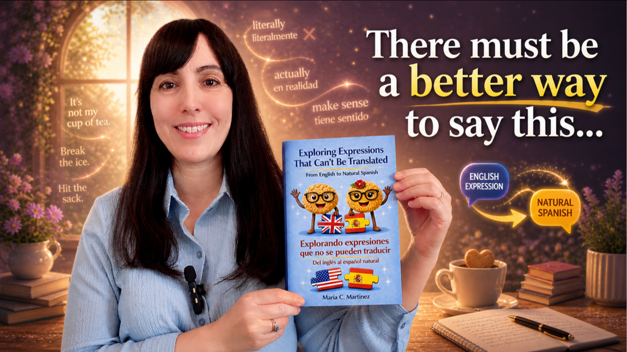
That observation inspired my latest book collection.
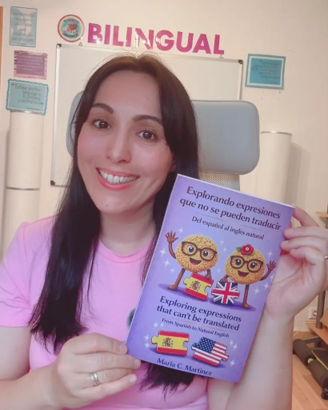
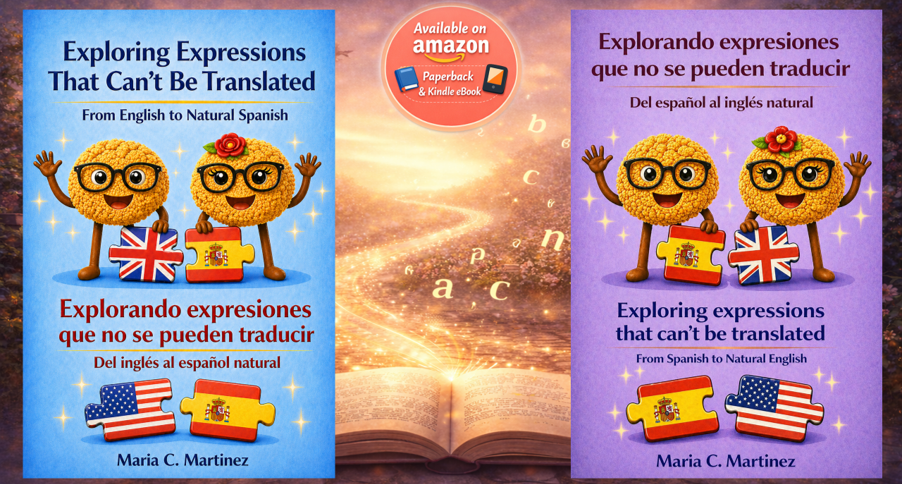
One volume explores English expressions that don't translate naturally into Spanish, while the other focuses on Spanish expressions that don't have a natural equivalent in English.
The aim isn't to offer perfect translations—because in many cases, they simply don't exist.
Instead, these books encourage readers to think beyond individual words and to explore context, intention, nuance and culture. Through practical examples, dialogues and real-life situations, they help learners develop a more natural understanding of both languages.
Ultimately, successful communication isn't about translating words.
It's about understanding people.
If you'd like to explore these ideas further, you can find the books here:
Explorando expresiones que no se pueden traducir (del español al inglés natural):
See on Amazon
Exploring Expressions That Can't Be Translated (From English to Natural Spanish):
See on Amazon
Also published on the LTL Blog
A different version of this article was also published on the LTL Language Teaching Lab blog. If you'd like to read that version as well, you can find it here:
see on Amazon
Más allá de la traducción: aprender a pensar entre dos idiomas
Si enseñas o aprendes un idioma desde hace tiempo, seguramente habrás escuchado preguntas como estas:
"¿Cómo se dice esto en inglés?"
O quizá:
"¿Cómo se dice esto en español?"
A primera vista parecen preguntas muy sencillas. Es fácil pensar que aprender un idioma consiste simplemente en encontrar la palabra equivalente en otra lengua. Sin embargo, después de más de veinticinco años enseñando idiomas, he comprobado que algunos de los aprendizajes más valiosos surgen precisamente cuando esa traducción directa no existe.
Un estudiante de español puede preguntarme cómo traducir sobremesa. Un estudiante de inglés puede querer encontrar un equivalente exacto para palabras como awkward, cringe o random. El verdadero reto no está en el vocabulario, sino en todo lo que esas palabras transmiten: costumbres, emociones, formas de relacionarse y maneras de entender la realidad.
Muchas veces una traducción puede ser correcta desde el punto de vista gramatical y, sin embargo, sonar completamente artificial para un hablante nativo.
Y es ahí donde el aprendizaje de idiomas adquiere una dimensión mucho más interesante.
En lugar de buscar únicamente una traducción palabra por palabra, los estudiantes empiezan a plantearse preguntas diferentes:
• ¿Qué quiere expresar realmente la persona que habla?
• ¿Cómo comunicaría esa misma idea un hablante nativo?
• ¿Qué matices culturales, emocionales o sociales esconden esas palabras?
Responder a estas preguntas no solo amplía el vocabulario. También desarrolla la competencia intercultural, una habilidad cada vez más importante en un mundo donde convivimos con personas de culturas muy diferentes.
Las películas, las series, la música, la literatura, las redes sociales o las conversaciones cotidianas nos muestran que cada idioma organiza la realidad de una forma distinta. Poco a poco, los estudiantes descubren que alcanzar la fluidez no consiste únicamente en conocer más palabras, sino en comprender cómo piensan, sienten e interactúan quienes hablan esa lengua.
A lo largo de mi trayectoria como docente observé que había determinadas expresiones que aparecían constantemente en clase. Una y otra vez mis alumnos encontraban dificultades con frases que parecían sencillas, pero que no podían traducirse de manera natural. El problema casi nunca era únicamente lingüístico; detrás había diferencias culturales y distintas maneras de interpretar el mundo.
Esa reflexión fue la que dio origen a mi colección de libros más reciente.
Uno de los libros explora expresiones del inglés que no pueden traducirse de forma natural al español, mientras que el otro hace el recorrido inverso y analiza expresiones españolas que no encuentran un equivalente natural en inglés.
El objetivo no es ofrecer traducciones perfectas, porque en muchos casos simplemente no existen.
Lo que pretenden estos libros es ayudar al lector a comprender el contexto, la intención, los matices y la cultura que hay detrás de cada expresión. A través de diálogos, situaciones reales y numerosos ejemplos prácticos, invitan a ir más allá del diccionario y a desarrollar una comprensión mucho más natural de ambos idiomas.
Porque, al fin y al cabo, comunicarse con éxito no consiste en traducir palabras.
Consiste en comprender a las personas.
Si te interesa profundizar en este tema, puedes encontrar los libros aquí:
Explorando expresiones que no se pueden traducir (del español al inglés natural):
See on Amazon
Exploring Expressions That Can't Be Translated (From English to Natural Spanish):
See on Amazon
También puedes leer otra versión de este artículo
Una versión diferente de esta reflexión fue publicada anteriormente en el blog de LTL Language Teaching Lab. Si te apetece leerla, puedes encontrarla aquí:
See on Amazon
Autora: Margarita García de Vinuesa
Raíces que cruzan fronteras: el reto emocional de las familias bilingües
21 July 2026
Vivir lejos de nuestro país nos permite crecer, aprender y construir una nueva vida, pero también nos enfrenta a uno de los desafíos emocionales más difíciles: no poder estar presentes cuando nuestra familia nos necesita.
que cruzan fronteras: el reto emocional de las familias bilingües
Las familias bilingües e internacionales saben que vivir en otro país es una aventura llena de oportunidades. Aprendemos nuevos idiomas, descubrimos otras culturas y construimos puentes entre diferentes formas de entender el mundo. Sin embargo, hay una realidad de la que pocas veces hablamos: el dolor de estar lejos cuando ocurre una emergencia familiar.
Una llamada inesperada puede cambiar el rumbo de nuestro día. Una enfermedad, una hospitalización o una pérdida familiar nos recuerdan que, aunque hayamos creado un hogar en otro lugar, una parte de nuestro corazón sigue viviendo a miles de kilómetros de distancia.
Muchas familias migrantes experimentan sentimientos de culpa. Nos preguntamos si deberíamos haber estado más cerca, si podríamos haber ayudado más o si tomamos la decisión correcta al marcharnos. Son emociones humanas y frecuentes entre quienes han construido una vida internacional.
Para los niños bilingües también puede resultar difícil comprender estas situaciones. Ven la tristeza de sus padres, escuchan conversaciones con familiares lejanos y descubren que el amor puede sentirse muy fuerte incluso cuando las personas están lejos.
En estos momentos, la tecnología se convierte en una herramienta valiosa. Las videollamadas, los mensajes de voz y los encuentros virtuales no sustituyen un abrazo, pero sí permiten acompañar, escuchar y demostrar que seguimos presentes.
Quizá no podamos viajar inmediatamente. Quizá no podamos estar físicamente donde quisiéramos. Pero podemos recordar algo importante: el amor no desaparece con la distancia.
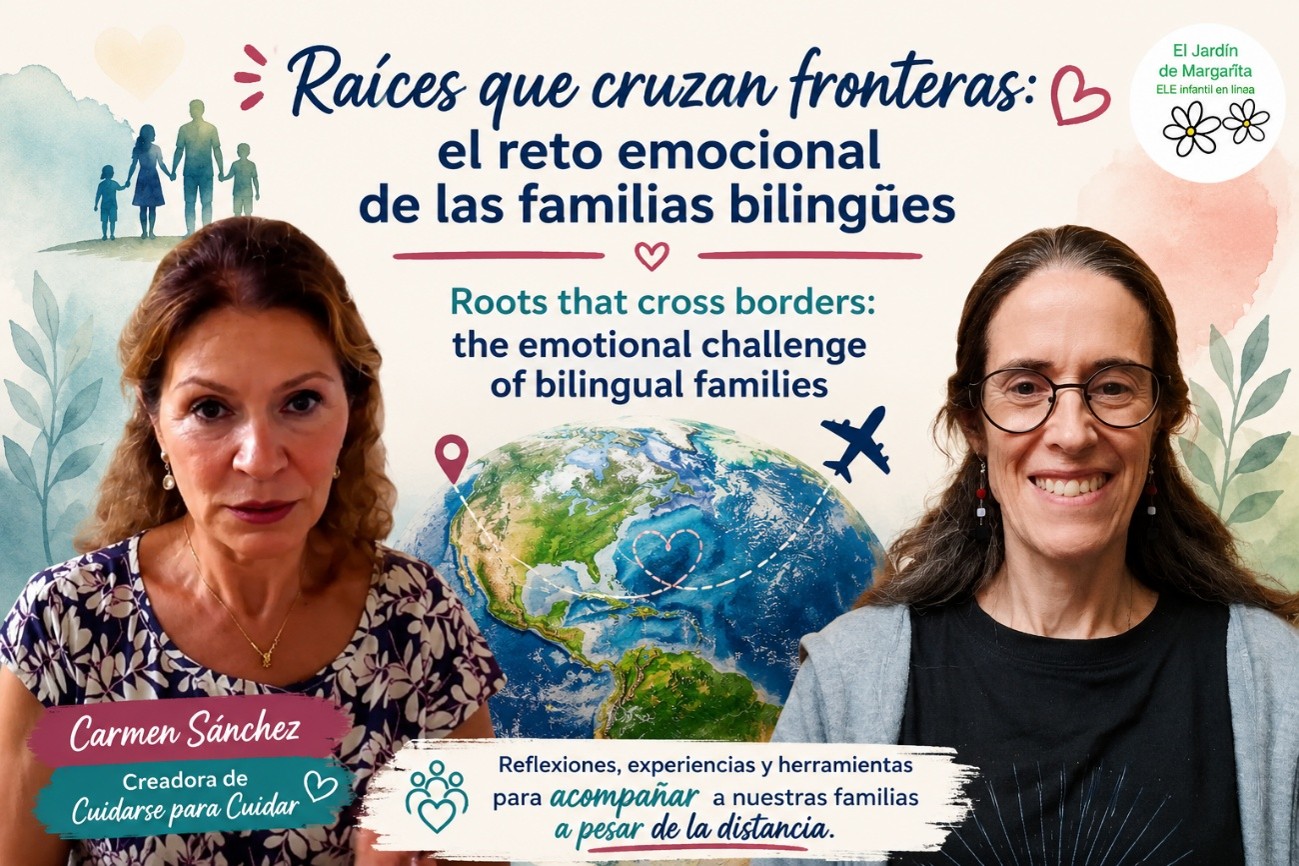
Si este tema resuena contigo, te invito a ver este video de mi canal de YouTube, donde converso con Carmen Sánchez, creadora del proyecto Cuidarse para Cuidar. Durante la entrevista reflexionamos sobre el impacto emocional que supone vivir lejos de nuestras familias, la culpa que a veces sentimos cuando no podemos estar presentes y la importancia de aprender a cuidarnos para poder acompañar mejor a quienes queremos.
👉 Watch / View on YouTube
Porque detrás de cada familia bilingüe hay historias de amor, resiliencia y vínculos que trascienden cualquier frontera.
Roots that cross borders: the emotional challenge of bilingual families
Author: Margarita García de Vinuesa
Short Description
Living abroad offers countless opportunities, but it also comes with an emotional challenge that many international families know well: being far away when loved ones need us most.
Roots that cross borders: the emotional challenge of bilingual families
International and bilingual families often celebrate the benefits of living abroad: new languages, new cultures, and new opportunities. Yet there is another side to this experience that receives far less attention—the emotional impact of being far from loved ones during difficult times.
A phone call can instantly remind us that part of our lives remains connected to another country. Illness, family emergencies, and loss can leave us feeling helpless, especially when travel is not immediately possible.
Many expatriate families struggle with feelings of guilt. We wonder whether we should be closer, whether we are doing enough, or whether our decision to build a life abroad has created an impossible distance between us and those we love.
Children growing up bilingually often witness these emotions as well. They learn that family connections extend beyond borders and that love can remain strong even when people are separated by thousands of miles.
Although technology cannot replace a hug, it allows families to remain connected through video calls, voice messages, and shared moments across continents. These connections become especially meaningful when life becomes difficult.
If this topic resonates with you, I invite you to watch this YouTube video, where I interview Carmen Sánchez, founder of Cuidarse para Cuidar. Together, we explore the emotional impact of living far from our families, the feelings of guilt that can arise when we cannot be present, and the importance of self-care when supporting loved ones from a distance.
👉 Watch / View on YouTube
Behind every bilingual family, there is a story of resilience, love, and connection that reaches far beyond borders.
Autora: Margarita García de Vinuesa
Escribir en español: un paso importante para los niños que aprenden español como lengua de herencia
26 Sep 2026
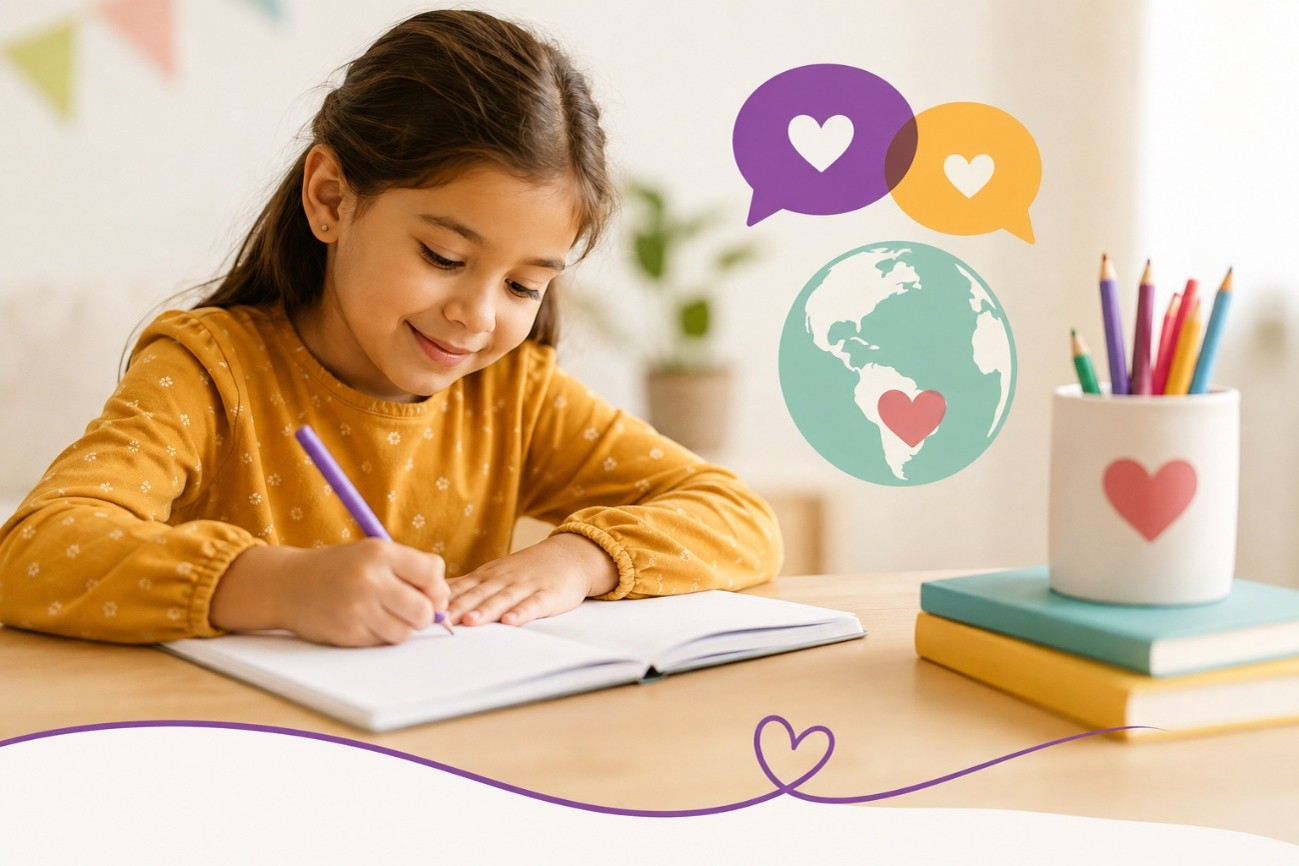
En muchas familias bilingües ocurre algo muy parecido: los niños entienden español, lo hablan con sus familiares y forman parte de una familia donde el español está presente, pero cuando llega el momento de escribir… las cosas se complican.
Y es completamente normal.
Aprender una lengua de herencia no significa solamente aprender a hablarla. También significa, poco a poco, descubrir cómo leerla, escribirla y utilizarla para expresar nuestras propias ideas, recuerdos y emociones.
Para muchos niños bilingües, escribir en español puede convertirse en un puente entre las palabras que escuchan en casa y su propia identidad.
Hablar español no siempre significa saber escribirlo
Un niño puede comunicarse perfectamente en español y, sin embargo, tener dificultades para escribir una frase, utilizar correctamente los tiempos verbales, colocar los acentos o encontrar la palabra que necesita.
Esto no significa que su español sea “malo”.
Significa que está desarrollando diferentes habilidades lingüísticas a ritmos diferentes.
La lengua oral y la lengua escrita requieren aprendizajes distintos. Por eso es tan importante ofrecer a los niños oportunidades para escribir en español sin convertir la escritura en una obligación o en una prueba constante de lo que saben.
La escritura puede empezar con algo muy sencillo:
una palabra que les gusta;
una pequeña descripción;
una historia inventada;
una experiencia familiar;
una carta a los abuelos;
una receta;
un dibujo acompañado de unas frases;
o simplemente unas líneas sobre algo que les haya ocurrido.
Lo importante es que tengan algo que quieran contar.
¿Por qué es importante escribir en la lengua de herencia?
Escribir en español puede ayudar a los niños bilingües a desarrollar mucho más que la ortografía o la gramática.
Fortalece la conexión con la familia
Cuando un niño escribe en la lengua que comparte con sus padres, abuelos u otros familiares, está utilizando el español para conservar recuerdos y crear nuevas experiencias.
Ayuda a construir su identidad
Las lenguas forman parte de nuestra historia. Poder expresarse en español permite a muchos niños sentirse más conectados con sus raíces y con las diferentes partes de su identidad.
Desarrolla creatividad y confianza
Cuando un niño descubre que puede crear una historia, escribir un poema o contar algo que le ha sucedido en español, también descubre que su español sirve para crear, no solamente para responder preguntas.
Abre la puerta a la lectura
La escritura y la lectura se apoyan mutuamente. Cuanto más contacto tienen los niños con textos significativos en español, más familiaridad adquieren con las palabras, las estructuras y la forma escrita de la lengua.
La escritura no tiene que ser perfecta
Este es uno de los mensajes que considero más importantes para las familias bilingües:
No esperemos a que el español de nuestros hijos sea perfecto para animarlos a escribir.
Escribiendo también se aprende.
Un texto lleno de errores puede ser el comienzo de un proceso maravilloso. Podemos corregir, acompañar y enseñar, pero sin quitarle al niño las ganas de contar su historia.
Antes de preguntar:
“¿Está bien escrito?”
podemos preguntar:
“¿Qué quieres contarme?”
Porque detrás de cada texto infantil hay una oportunidad para escuchar su voz.
Una historia puede empezar con una sola palabra
En mis clases de español como lengua de herencia, me gusta buscar situaciones en las que los niños puedan utilizar el español de una manera creativa, cercana y significativa.
Una palabra puede convertirse en una conversación.
Una fotografía puede convertirse en una historia.
Un recuerdo familiar puede convertirse en un pequeño relato.
Y una experiencia vivida entre dos idiomas puede convertirse en algo que merece ser compartido.
Precisamente por eso quiero invitar a las familias bilingües a participar en un proyecto muy especial.
Tu Historia Entre Idiomas | Your Story Between Languages
Bilingual Cerebros organiza la 2ª Edición Internacional de “Tu Historia Entre Idiomas | Your Story Between Languages”, un concurso que celebra las lenguas, las historias y la riqueza de crecer entre diferentes idiomas y culturas.
La participación es gratuita y está abierta a niños, adolescentes y adultos de cualquier país.
Puedes participar con:
un relato corto;
una anécdota personal;
un poema;
un dibujo para los participantes más pequeños.
Los textos pueden tener entre 100 y 500 palabras.
Y hay algo especialmente bonito: no es necesario elegir un solo idioma.
Puedes escribir en español, inglés, alemán o combinar varios idiomas. El cambio de una lengua a otra —el code-switching— también forma parte de muchas historias bilingües reales.
¿Qué puedes contar?
Quizás puedes contar qué idioma utilizas con tus padres.
O una palabra que solamente existe en vuestra familia.
Una historia divertida que ocurrió porque alguien mezcló dos idiomas.
Un recuerdo de tus abuelos.
Un viaje.
Una tradición familiar.
Una palabra española que te encanta.
O simplemente cómo es vivir y crecer entre dos o más lenguas.
No hay una historia demasiado pequeña.
Cada familia tiene una manera diferente de vivir el bilingüismo, y cada niño tiene una voz propia.
¿Cuándo puedes participar?
La convocatoria estará abierta del 15 de septiembre al 15 de octubre.
Los ganadores se anunciarán el 31 de octubre.
Cada ganador recibirá un libro bilingüe aportado por una de las autoras participantes.
Entre las autoras participantes se encuentra también Margarita García de Vinuesa, profesora de español y autora de libros bilingües, fundadora de El Jardín de Margarita.
Una invitación para las familias
Si tienes un niño que está creciendo entre español y otro idioma, te animo a no pensar solamente en cuánto español habla.
Pregúntate también:
¿Tiene oportunidades para utilizar ese español para contar quién es?
Porque mantener una lengua de herencia no consiste únicamente en conservar palabras.
También consiste en conservar recuerdos, historias, vínculos y formas de mirar el mundo.
Y escribir puede ser una maravillosa manera de hacerlo.
Desde El Jardín de Margarita te invito a participar en Tu Historia Entre Idiomas | Your Story Between Languages.
Porque cuando un niño escribe en español, no solamente está aprendiendo a escribir.
Está aprendiendo que su voz también tiene un lugar en esa lengua.
Claro. Aquí tienes la traducción al inglés, manteniendo el tono cercano y profesional del artículo y respetando el enfoque hacia las familias bilingües.
Author: Margarita García de Vinuesa
Writing in Spanish: An Important Step for Children Learning Spanish as a Heritage Language
26 Sep 2026
Something very similar happens in many bilingual families: children understand Spanish, speak it with their relatives, and are part of a family where Spanish is present, but when it comes time to write… things can become more difficult.
And that is completely normal.
Learning a heritage language does not simply mean learning to speak it. It also means, little by little, discovering how to read and write it and how to use it to express our own ideas, memories, and emotions.
For many bilingual children, writing in Spanish can become a bridge between the words they hear at home and their own identity.
Speaking Spanish does not always mean knowing how to write it
A child may communicate perfectly well in Spanish and still have difficulty writing a sentence, using verb tenses correctly, adding accents, or finding the word they need.
This does not mean that their Spanish is “bad.”
It means that they are developing different language skills at different rates.
Oral language and written language require different kinds of learning. That is why it is so important to give children opportunities to write in Spanish without turning writing into an obligation or a constant test of what they know.
Writing can begin with something very simple:
a word they like;
a short description;
an imaginary story;
a family experience;
a letter to their grandparents;
a recipe;
a drawing accompanied by a few sentences;
or simply a few lines about something that happened to them.
What matters is that they have something they want to tell.
Why is writing in the heritage language important?
Writing in Spanish can help bilingual children develop much more than spelling or grammar.
It strengthens their connection with their family
When a child writes in the language they share with their parents, grandparents, or other relatives, they are using Spanish to preserve memories and create new experiences.
It helps build their identity
Languages are part of our story. Being able to express themselves in Spanish can help many children feel more connected to their roots and to the different parts of their identity.
It develops creativity and confidence
When a child discovers that they can create a story, write a poem, or tell something that happened to them in Spanish, they also discover that their Spanish can be used to create, not just to answer questions.
It opens the door to reading
Writing and reading support each other. The more contact children have with meaningful texts in Spanish, the more familiar they become with words, language structures, and written language.
Writing does not have to be perfect
This is one of the messages I consider most important for bilingual families:
We should not wait for our children's Spanish to be perfect before encouraging them to write.
We also learn by writing.
A text full of mistakes can be the beginning of a wonderful learning process. We can correct, support, and teach, but without taking away a child's desire to tell their story.
Before asking:
“Is it written correctly?”
we can ask:
“What do you want to tell me?”
Because behind every child's text there is an opportunity to listen to their voice.
A story can begin with a single word
In my Spanish heritage-language classes, I like to look for situations in which children can use Spanish in a creative, personal, and meaningful way.
A word can become a conversation.
A photograph can become a story.
A family memory can become a short narrative.
And an experience lived between two languages can become something worth sharing.
That is precisely why I would like to invite bilingual families to take part in a very special project.
Tu Historia Entre Idiomas | Your Story Between Languages
Bilingual Cerebros is organizing the 2nd International Edition of “Tu Historia Entre Idiomas | Your Story Between Languages,” a competition that celebrates languages, stories, and the richness of growing up between different languages and cultures.
Participation is free and open to children, teenagers, and adults from any country.
You can participate with:
a short story;
a personal anecdote;
a poem;
a drawing for younger participants.
Entries can be between 100 and 500 words.
And there is something especially beautiful about this competition: you do not have to choose just one language.
You can write in Spanish, English, German, or combine several languages. Moving from one language to another — code-switching — is also part of the real-life experience of many bilingual families.
What could you write about?
Perhaps you could write about which language you use with your parents.
Or a word that only exists in your family.
A funny story that happened because someone mixed two languages.
A memory of your grandparents.
A trip.
A family tradition.
A Spanish word you love.
Or simply what it is like to live and grow up between two or more languages.
No story is too small.
Every family experiences bilingualism differently, and every child has their own voice.
When can you participate?
The competition will be open from September 15 to October 15.
The winners will be announced on October 31.
Each winner will receive a bilingual book contributed by one of the participating authors.
One of the participating authors is also Margarita García de Vinuesa, Spanish teacher and bilingual book author and founder of El Jardín de Margarita.
An invitation to bilingual families
If you have a child who is growing up between Spanish and another language, I encourage you not to think only about how much Spanish they speak.
Ask yourself:
Do they have opportunities to use Spanish to tell their own story?
Because maintaining a heritage language is not only about preserving words.
It is also about preserving memories, stories, connections, and ways of seeing the world.
And writing can be a wonderful way to do that.
From El Jardín de Margarita, I invite you to take part in Tu Historia Entre Idiomas | Your Story Between Languages.
Because when a child writes in Spanish, they are not only learning how to write.
They are learning that their voice also has a place in that language.
Every Language Carries a Story: Tu Historia Entre Idiomas Returns for Its Second International Edition
Every language carries a story. What’s yours?
26 Sep 2026
For many of us, language is far more than a means of communication. It can be the language we speak with our parents, the language of our childhood, the language we use at school or at work, or a new language that gradually becomes part of who we are. Sometimes several of these languages coexist in our lives, each one connected to different people, places, memories and experiences.
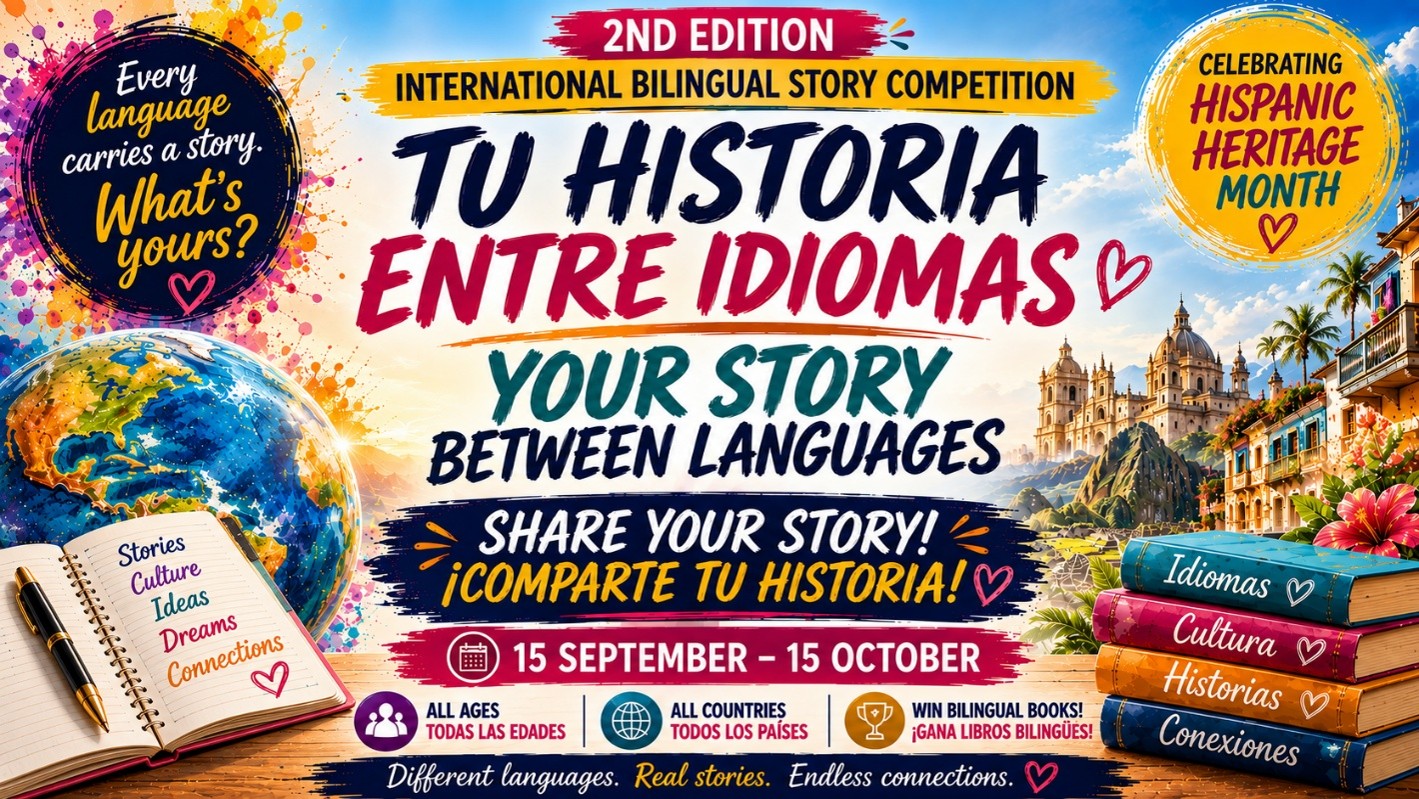
It was this idea that inspired Tu Historia Entre Idiomas | Your Story Between Languages, an international competition created to give people of all ages an opportunity to tell the stories behind their languages..
Following the success of its first edition, the competition is returning this year for a second international edition, running from 15 September to 15 October 2026, during Hispanic Heritage Month..
More collaboration, more authors, more books and, above all, more opportunities for people around the world to share their voices.
Why stories between languages matter.
As language educators, we spend a great deal of time teaching vocabulary, grammar, pronunciation and communication skills. All of these are important. But behind every learner there is also a personal relationship with language.
A child may speak one language with their grandparents and another at school. A teenager may be trying to maintain a heritage language while becoming increasingly dominant in the language of the country in which they live. An adult may have moved abroad and discovered that learning another language has changed not only how they communicate, but also how they see themselves.
Others may simply have fallen in love with another language and the culture, friendships and opportunities that came with it.
These experiences deserve a place in language education.
When learners are invited to write about something that genuinely belongs to them, language stops being simply an academic exercise. It becomes a vehicle for identity, memory, creativity, reflection and connection.
That is at the heart of Tu Historia Entre Idiomas / Your Story Between Languages
From the first edition to something bigger
The response to the first edition showed us that there was genuine enthusiasm for a project that allowed participants to connect language learning with their own experiences.
Rather than asking everyone to write in exactly the same way, the competition created space for different ages, different backgrounds and different relationships with language.
For the second edition, we wanted to build on that foundation.
The project has grown through collaboration between educators, authors and language-learning communities who share a belief in the value of multilingual voices. This year, I am delighted to be joined by five fellow authors, each contributing a bilingual book as part of the competition prizes.
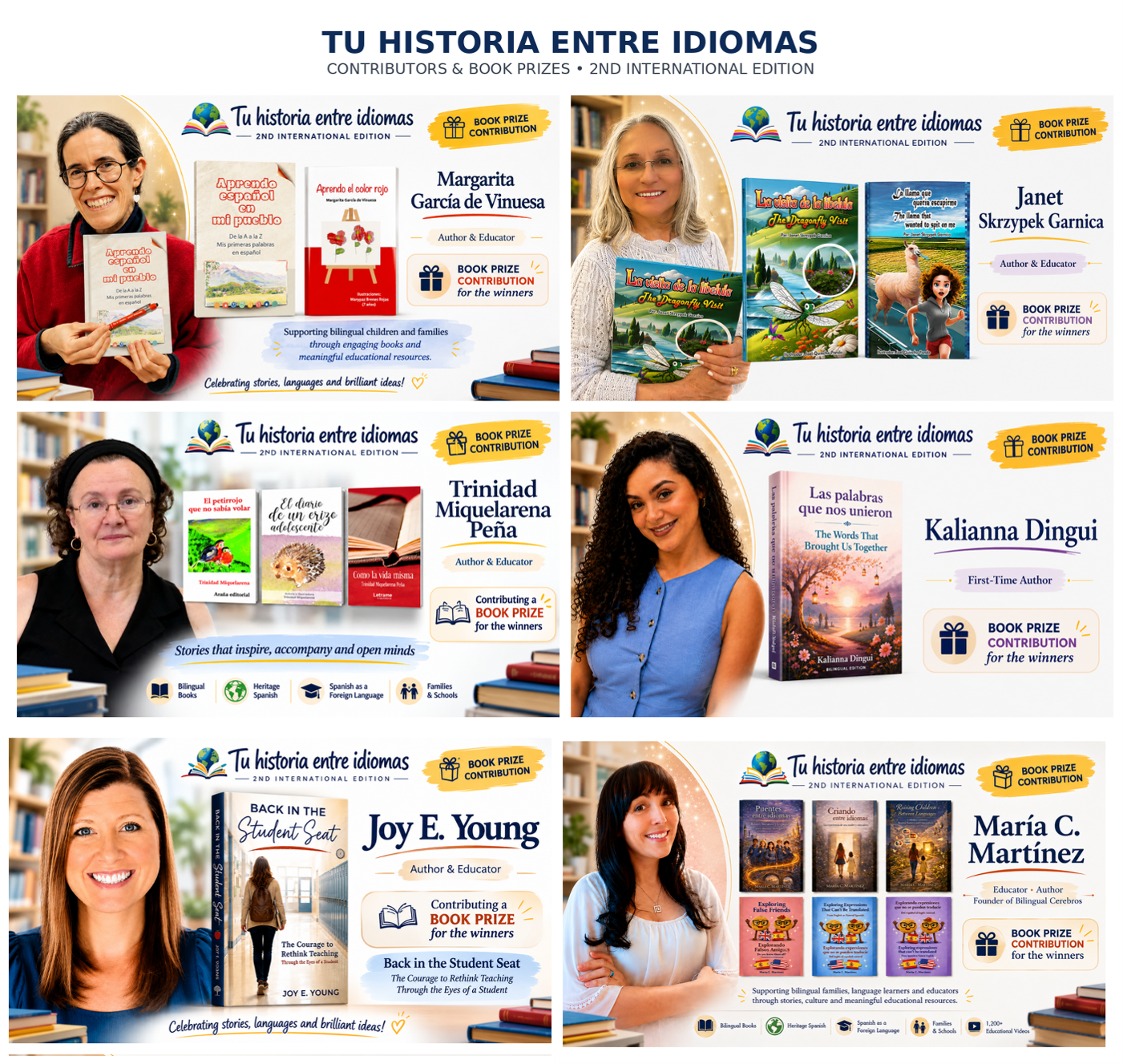
Together, the six participating authors are: Margarita García de Vinuesa, teacher and bilingual author from El Jardín de ELE; Trinidad Miquelarena Peña, bilingual author; Kalianna Dingui, teacher and bilingual author; Janet Skrzypek, teacher and bilingual author; Joy E. Young, teacher and bilingual author; and María C. Martínez, teacher, bilingual author and creator of Bilingual Cerebros.
Their involvement makes this edition particularly special. It transforms the competition from an individual initiative into a wider celebration of the work being done by educators and authors who create resources and literature across languages.
And the prizes themselves reflect the philosophy behind the project: each winner will receive a bilingual book contributed by one of the participating authors.
Not just for bilingual speakers
Despite its origins in experiences of bilingualism, Tu Historia Entre Idiomas is deliberately open to a much wider interpretation of what it means to live between languages.
Participants might write about growing up with two or more languages, learning a new language, moving to another country, maintaining their family's language, communicating with relatives across generations or simply what a particular language has come to mean to them.
Entries can be submitted in Spanish, English, German or a combination of languages. Multilingual writing and code-switching are welcome.
That freedom is intentional.
In real multilingual lives, languages do not always remain neatly separated. We move between them. We borrow from them. Certain memories may feel more natural in one language than another. Sometimes one word expresses something that another cannot quite capture.
Rather than treating this as something that needs to be corrected, the competition celebrates it as part of the richness of multilingual experience.
Stories, anecdotes, poetry — and even drawings
Participants do not have to produce a traditional short story.
They can submit a short story, personal anecdote or poem, with written entries between 100 and 500 words. Younger participants may also communicate their story through a drawing.
There is no geographical restriction and no upper or lower age category: the competition is open to children, teenagers and adults from any country.
This matters because living between languages is not an experience confined to one generation.
A child's relationship with language may look completely different from that of a parent, teacher, immigrant, heritage speaker or adult language learner. Yet each perspective can help us understand something about what languages mean in people's real lives.
More than a writing competition
Perhaps the most important aim of Tu Historia Entre Idiomas is not to find the most sophisticated piece of writing.
It is to encourage people to recognise that their linguistic experiences are worth telling.
For teachers, projects like this can also provide an opportunity to move beyond language exercises and invite students to use their developing language for an authentic purpose. A competition provides motivation, but the deeper value lies in the conversations that can emerge around identity, family, migration, belonging, language learning and cultural heritage.
A simple question such as “What is your language story?” can produce remarkably different answers.
And those answers remind us of something that can sometimes be forgotten in language education:
We do not simply teach languages. We teach people who already have stories, identities and voices.
Our role is to help them find more ways to express them.
How to take part
The second edition of Tu Historia Entre Idiomas | Your Story Between Languages runs from 15 September to 15 October 2026.
Participants can submit a short story, personal anecdote, poem or, for younger participants, a drawing. Written entries should contain between 100 and 500 words and may be in Spanish, English, German or a combination of languages.
Entries should be sent to bilingualcerebros@gmail.com, including the participant's name or pseudonym, age and country.
The winners will be announced on 31 October 2026, and each winner will receive a bilingual book contributed by one of the participating authors.
Most importantly, however, everyone who participates has the opportunity to stop for a moment and think about the languages that have accompanied them through their lives.
Share your voice. Share your languages. Share your story.
Because every language carries a story — and yours deserves to be told.
🎥 Want to know more about the competition?
I have also prepared a video in which I explain everything you need to know about the second edition of Tu historia entre idiomas | Your Story Between Languages, including how to participate, what you can submit, the languages you can use, and the prizes.
👉 Watch the full competition video here:
Cada idioma lleva consigo una historia: Tu Historia Entre Idiomas regresa con su segunda edición internacional
Un concurso internacional que invita a niños, jóvenes y adultos a explorar la lengua, la identidad, el sentido de pertenencia y las historias que nacen de vivir entre idiomas
Cada idioma lleva consigo una historia. ¿Cuál es la tuya?
26 Sep 2026
Para muchos de nosotros, un idioma es mucho más que un medio de comunicación. Puede ser la lengua que hablamos con nuestros padres, la lengua de nuestra infancia, la que utilizamos en el colegio o en el trabajo, o una nueva lengua que, poco a poco, acaba formando parte de quienes somos. A veces, varias de estas lenguas conviven en nuestra vida, y cada una de ellas está vinculada a personas, lugares, recuerdos y experiencias diferentes.
De esta idea nació Tu Historia Entre Idiomas | Your Story Between Languages, un concurso internacional creado para ofrecer a personas de todas las edades la oportunidad de contar las historias que existen detrás de sus idiomas.
Tras el éxito de su primera edición, el concurso regresa este año con una segunda edición internacional, que se celebrará del 15 de septiembre al 15 de octubre de 2026, coincidiendo con el Mes de la Herencia Hispana.
Pero esta vez el proyecto crece.
Más colaboración, más autores, más libros y, sobre todo, más oportunidades para que personas de todo el mundo compartan sus voces.
Por qué importan las historias entre idiomas
Como docentes de lenguas, dedicamos mucho tiempo a enseñar vocabulario, gramática, pronunciación y habilidades comunicativas. Todo ello es importante. Pero detrás de cada estudiante existe también una relación personal con los idiomas.
Un niño puede hablar una lengua con sus abuelos y otra en el colegio. Un adolescente puede intentar conservar su lengua de herencia mientras la lengua del país en el que vive adquiere cada vez más protagonismo en su día a día. Un adulto puede haberse trasladado a otro país y descubrir que aprender un nuevo idioma ha cambiado no solo su manera de comunicarse, sino también la forma en que se percibe a sí mismo.
Otras personas, sencillamente, pueden haberse enamorado de otra lengua y de la cultura, las amistades y las oportunidades que llegaron con ella.
Estas experiencias también merecen tener un espacio dentro de la enseñanza de idiomas.
Cuando invitamos a los estudiantes a escribir sobre algo que realmente les pertenece, la lengua deja de ser únicamente un ejercicio académico. Se convierte en un vehículo para expresar identidad, memoria, creatividad, reflexión y conexión.
Esa es precisamente la esencia de Tu Historia Entre Idiomas | Your Story Between Languages.
De la primera edición a un proyecto aún mayor
La respuesta a la primera edición nos demostró que existía un verdadero entusiasmo por un proyecto que permitiera a los participantes conectar el aprendizaje de idiomas con sus propias experiencias.
En lugar de pedir a todo el mundo que escribiera de la misma manera, el concurso abrió un espacio para diferentes edades, distintos contextos y distintas formas de relacionarse con las lenguas.
Para esta segunda edición queríamos seguir construyendo sobre esa base.
El proyecto ha crecido gracias a la colaboración entre docentes, autores y comunidades vinculadas al aprendizaje de idiomas que comparten la convicción de que las voces multilingües tienen un enorme valor. Este año tengo la enorme alegría de contar con la participación de cinco autores, cada uno de los cuales aporta un libro bilingüe como parte de los premios del concurso.
Los seis autores participantes somos: Margarita García de Vinuesa, docente y autora bilingüe de El Jardín de ELE; Trinidad Miquelarena Peña, autora bilingüe; Kalianna Dingui, docente y autora bilingüe; Janet Skrzypek, docente y autora bilingüe; Joy E. Young, docente y autora bilingüe; y María C. Martínez, docente, autora bilingüe y creadora de Bilingual Cerebros.
Su participación hace que esta edición sea especialmente significativa. El concurso deja de ser una iniciativa individual para convertirse en una celebración más amplia del trabajo que realizan docentes y autores que crean recursos y literatura entre lenguas.
Y los propios premios reflejan la filosofía del proyecto: cada ganador recibirá un libro bilingüe aportado por uno de los autores participantes.
No es solo para personas bilingües
Aunque Tu Historia Entre Idiomas nació de experiencias relacionadas con el bilingüismo, el concurso está deliberadamente abierto a una interpretación mucho más amplia de lo que significa vivir entre lenguas.
Los participantes pueden escribir sobre cómo ha sido crecer con dos o más idiomas, aprender una nueva lengua, mudarse a otro país, mantener la lengua de su familia, comunicarse con familiares de distintas generaciones o, sencillamente, explicar qué ha llegado a significar para ellos una determinada lengua.
Las obras pueden presentarse en español, inglés, alemán o en una combinación de idiomas. La escritura multilingüe y el code-switching, o alternancia entre lenguas, son bienvenidos.
Esta libertad es intencionada.
En la vida real de las personas multilingües, los idiomas no siempre permanecen perfectamente separados. Pasamos de uno a otro. Tomamos prestadas palabras y expresiones. Hay recuerdos que quizá nos resulten más naturales en una lengua que en otra. Y, en ocasiones, una palabra consigue expresar algo que otra lengua no logra transmitir exactamente de la misma manera.
En lugar de considerar esta mezcla como algo que debe corregirse, el concurso la celebra como parte de la riqueza de la experiencia multilingüe.
Relatos, anécdotas, poesía… e incluso dibujos
Los participantes no tienen que escribir necesariamente un relato tradicional.
Pueden presentar un relato breve, una anécdota personal o un poema, con una extensión de entre 100 y 500 palabras. Los participantes más pequeños también pueden contar su historia a través de un dibujo.
No existen restricciones geográficas ni límites de edad: el concurso está abierto a niños, adolescentes y adultos de cualquier país.
Esto es importante porque vivir entre idiomas no es una experiencia que pertenezca únicamente a una generación.
La relación de un niño con las lenguas puede ser completamente diferente de la de un padre o una madre, un docente, una persona que ha emigrado, un hablante de una lengua de herencia o un adulto que está aprendiendo un nuevo idioma. Sin embargo, cada una de estas perspectivas puede ayudarnos a comprender algo sobre el verdadero significado que tienen las lenguas en la vida de las personas.
Mucho más que un concurso de escritura
Quizá el objetivo más importante de Tu Historia Entre Idiomas no sea encontrar el texto más sofisticado.
Se trata, sobre todo, de animar a las personas a reconocer que sus experiencias lingüísticas merecen ser contadas.
Para los docentes, proyectos como este también ofrecen la posibilidad de ir más allá de los ejercicios tradicionales e invitar a los estudiantes a utilizar la lengua que están aprendiendo con un propósito auténtico. Un concurso aporta motivación, pero su verdadero valor reside en las conversaciones que pueden surgir en torno a la identidad, la familia, la migración, el sentido de pertenencia, el aprendizaje de idiomas y la herencia cultural.
Una pregunta tan sencilla como «¿Cuál es tu historia con los idiomas?» puede generar respuestas extraordinariamente diferentes.
Y esas respuestas nos recuerdan algo que, en ocasiones, podemos olvidar dentro de la enseñanza de lenguas:
No enseñamos simplemente idiomas. Enseñamos a personas que ya tienen historias, identidades y voces propias.
Nuestra labor consiste en ayudarlas a encontrar nuevas formas de expresarlas.
Cómo participar
La segunda edición de Tu Historia Entre Idiomas | Your Story Between Languages se celebrará del 15 de septiembre al 15 de octubre de 2026.
Los participantes pueden enviar un relato breve, una anécdota personal, un poema o, en el caso de los participantes más pequeños, un dibujo. Los textos deberán tener una extensión de entre 100 y 500 palabras y podrán estar escritos en español, inglés, alemán o en una combinación de idiomas.
Las obras deberán enviarse a bilingualcerebros@gmail.com, indicando el nombre o seudónimo del participante, su edad y su país.
Los ganadores se anunciarán el 31 de octubre de 2026, y cada uno recibirá un libro bilingüe aportado por uno de los autores participantes.
Pero, más allá de los premios, todas las personas que participen tendrán la oportunidad de detenerse por un momento y reflexionar sobre las lenguas que las han acompañado a lo largo de su vida.
Comparte tu voz. Comparte tus idiomas. Comparte tu historia.
Porque cada idioma lleva consigo una historia, y la tuya merece ser contada.
🎥 ¿Quieres saber más sobre el concurso?
También he preparado un vídeo en el que explico todo lo que necesitas saber sobre la segunda edición de Tu Historia Entre Idiomas | Your Story Between Languages: cómo participar, qué puedes presentar, qué idiomas puedes utilizar y cuáles son los premios.
👉 Puedes ver aquí el vídeo completo sobre el concurso:
This article was originally published on the LTL (Language Teaching Lab) Blog, alongside many other inspiring contributions to the language teaching community. A special thank you to Vicky Masson for giving me the opportunity to contribute and for kindly allowing me to share the article here on Bilingual Cerebros.
https://languageteachinglab.com/every-language-carries-a-story-tu-historia-entre-idiomas/